The Long Life of a Product
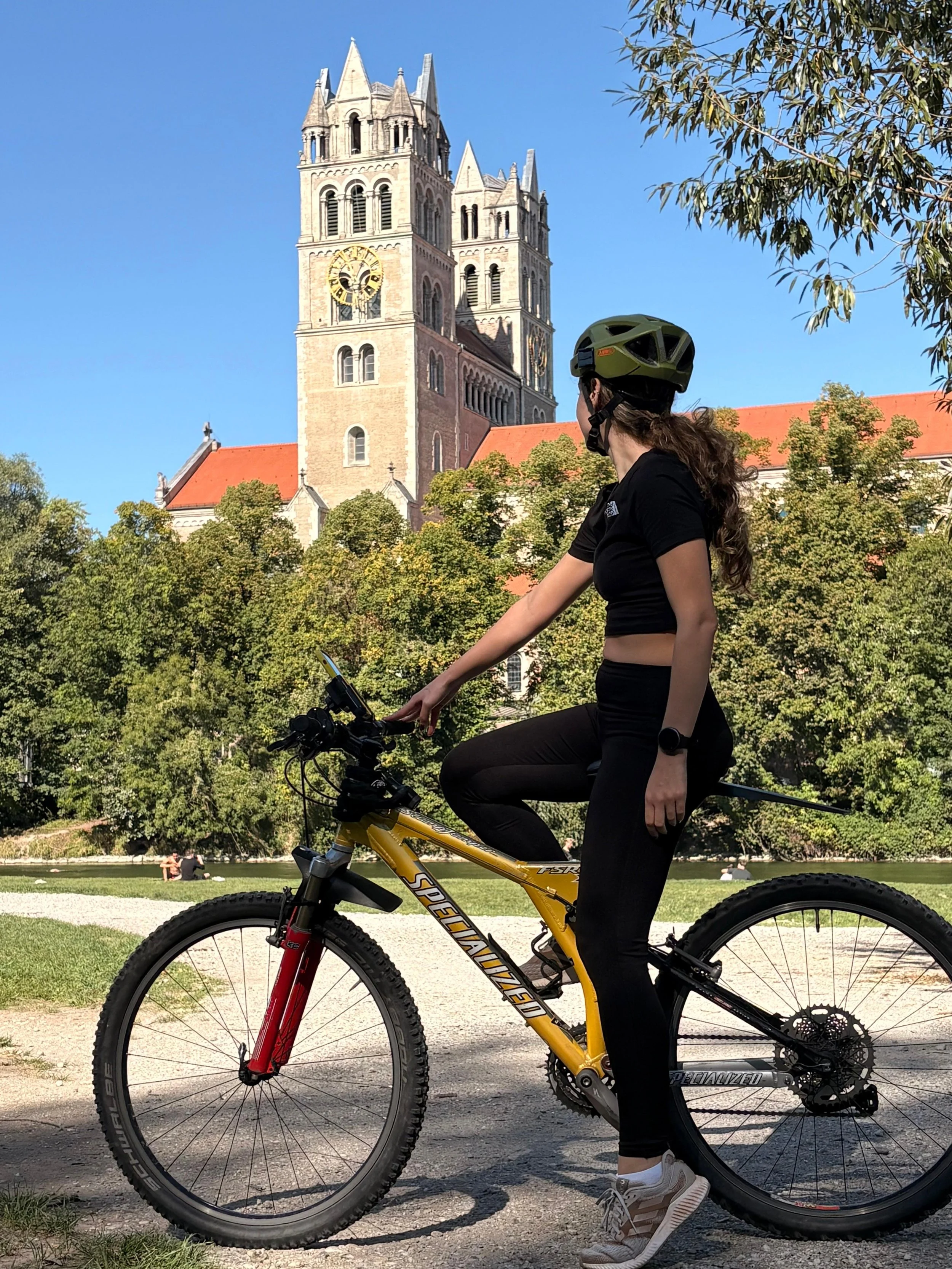
I have a bike from 1997. It is exactly my age, and still working perfectly. It has also put up with my average riding abilities, including a couple of falls every now and then. :)
One of the perks of living in Munich is that cycling has become a regular part of my daily life. I was also lucky enough to find this second-hand, or maybe even third-hand, bike through the right people and, indirectly, through my work.
Of course, a few parts were probably replaced over the years before it reached me, and I’m sure it has had some maintenance. But the core product is still there, functioning well, and still useful almost 30 years later. I think that says a lot about good product design.
A product that performs well and lasts for a long time does not need to be replaced with a new one as quickly, and every replacement that is avoided also avoids the need for another round of raw-material extraction, manufacturing, and eventually waste treatment. That is why we should see performance and durability as part of sustainability, rather than as separate product requirements. My bike is a good example. If one component fails, I do not have to throw away the entire bike. The component can usually be repaired or replaced, while the rest of the product continues doing its job. This is already a small example of circularity in practice.
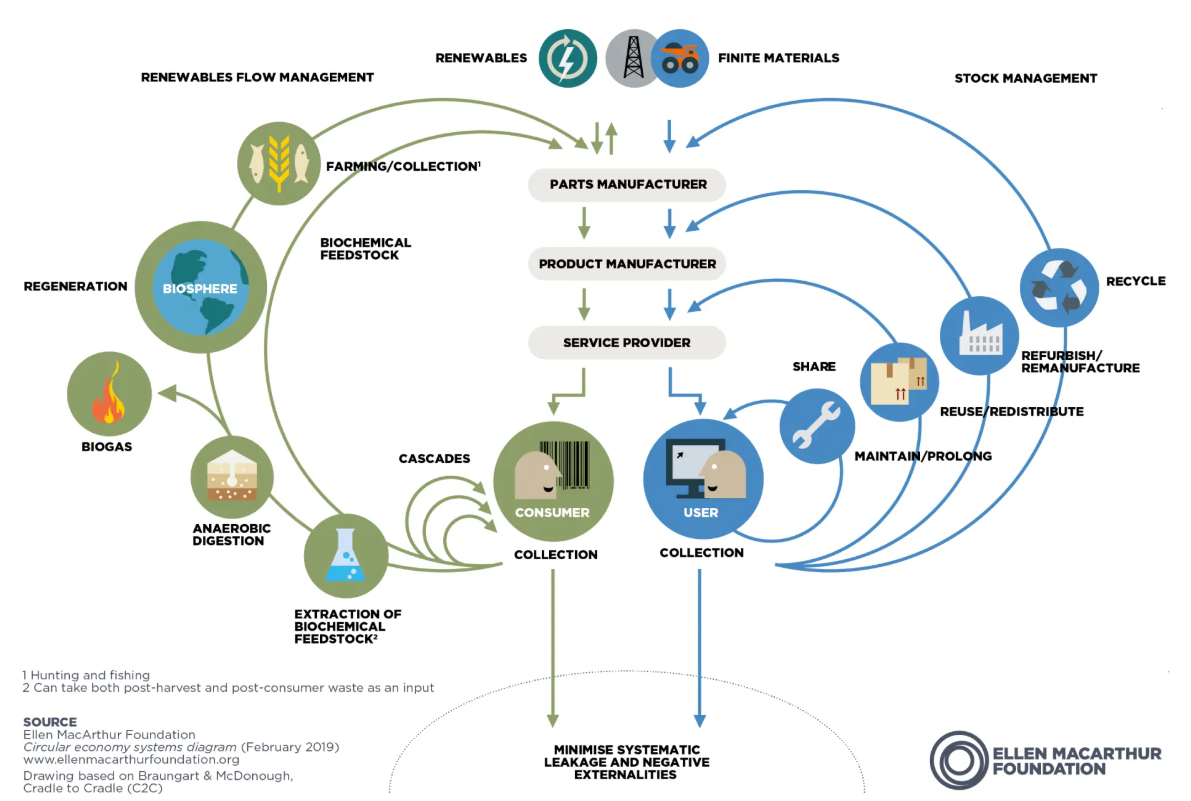
Circular economy systems diagram (“Butterfly Diagram”). Source: Ellen MacArthur Foundation, 2019.
Circularity is often understood simply as whether a product can be recycled at the end of its life. However, in an ideal circular economy, products and materials are kept in use for as long as possible and, when they can no longer serve their original purpose, their materials are brought back into circulation. In that sense, it works much like nature, there is very little concept of “waste.” Organic matter breaks down, nutrients return to the soil, and those nutrients support new growth. What comes out of one process becomes an input for another. A circular economy tries to apply the same principle to our products and materials by keeping them circulating rather than allowing them to become waste. As it is shown on the diagram from Ellen MacArthur Foundation, strategies such as reuse, sharing, refurbishment, and remanufacturing are positioned in the inner loops, while recycling appears further out. In general, the closer an approach is to the centre, the more value it preserves by keeping products, components, and materials in use for longer.
Yet keeping products within these loops does not happen automatically. It is very much related to how the product was designed in the first place. If components are permanently bonded together, repair becomes difficult. If spare parts are unavailable, a small failure can end the life of the entire product. If different materials cannot be separated, recycling becomes more complicated.
So circularity is actually a design topic, because design is really about making intentional choices. Every design process involves decisions, and once those decisions are made, some of their impacts can be difficult, or even impossible, to undo later. Circular design therefore needs to look beyond the product itself. It is an iterative process that keeps asking how a product fits into a wider system, not only how well it serves the user, but also how it interacts with manufacturing, maintenance, repair, reuse, and eventually what happens when it can no longer be used. This shift in perspective is closely connected to the idea of “rethinking progress”, which is moving away from optimizing individual parts in isolation and toward understanding how they work together within a wider system. With this approach, circularity and systems thinking come together. A decision that appears beneficial at one stage of a product’s life may create consequences somewhere else, which is why design needs to consider the whole journey of the product rather than only its first use.
My bike is obviously a very simple example, but I like what it represents. Almost 30 years later, it is still doing exactly what it was designed to do: making my everyday life easier, giving me a better way to commute, and helping me stay active along the way.
Sources / Further reading
Ellen MacArthur Foundation. (2019, September 16). Design and the circular economy – deep dive. Ellen MacArthur Foundation. https://www.ellenmacarthurfoundation.org/design-and-the-circular-economy-deep-divePourdehnad, J., Wexler, E. R., & Wilson, D. V. (2011). Integrating systems thinking and design thinking. The Systems Thinker, 22(9), 2–6. https://thesystemsthinker.com/integrating-systems-thinking-and-design-thinking/
