From Good Intentions to Good Decisions
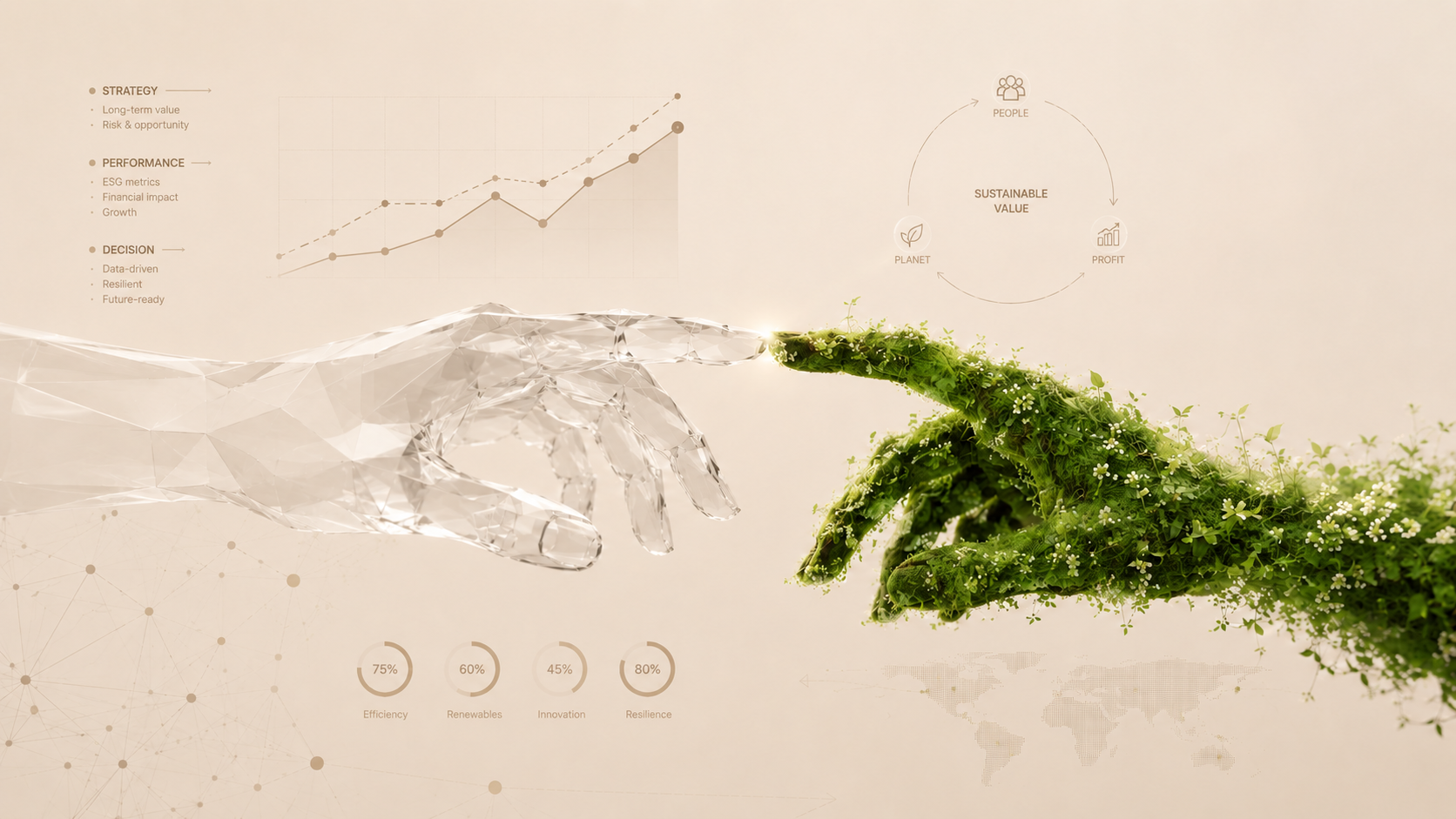
After attending a conference and several seminars last week, one thought stayed with me: sustainability conversations are changing.
For a long time, sustainability has often been communicated through values rooted in responsibility, care for people and nature, and concern for future generations. And of course, all of these things still matter. For many people working in sustainability, including myself, these values are probably one of the reasons why we became interested in the field in the first place.
But inside companies, values alone are often not enough to move decisions forward.
A sustainability idea may be meaningful, necessary, and scientifically well-supported. But if it cannot be connected to business priorities, it may still struggle to receive budget, attention, or leadership support. This does not mean sustainability needs to lose its values. It means those values need to be translated into the language of business, so they can become part of real decisions. And maybe this is one of the most important skills for sustainability professionals today: being able to speak both languages.
This is the point where the conversation changes: from only saying “this is the right thing to do” to also being able to explain “this is why it matters for the business.” The goal is to make the financial and strategic benefits of sustainability visible in the systems where decisions are actually made.
For example, reducing emissions may require investment. A company might need to change suppliers, redesign a product, improve energy efficiency, or invest in renewable energy. At first, these actions may look like additional costs. But the financial question is not only: What does action cost? It is also: What could inaction cost over time?
| If the company does not act... | This could lead to... |
|---|---|
| Emissions remain high | Higher exposure to carbon prices, environmental taxes, or future regulation |
| Energy use stays inefficient | Higher operating costs and more exposure to energy price volatility |
| Products are not redesigned | Risk of falling behind customer expectations or future product requirements |
| Suppliers are not engaged | Supply chain disruptions, compliance risks, or lack of reliable sustainability data |
| Sustainability data is not available | Less credibility with customers, investors, and regulators who increasingly expect reliable sustainability data |
| Old assets or processes remain unchanged | Risk of stranded assets or costly late-stage transformation |
Looking at sustainability this way changes the conversation. It is no longer only about spending money to reduce impact. It is also about avoiding future costs, reducing exposure, and making the business more resilient. This is why sustainability should not sit separately from business planning. It belongs in strategy, operations, and management decisions. I believe this is the way for sustainability to become more practical. It stops being only a broad ambition and becomes part of everyday decision-making.
A simple example of translating sustainability language into business language is renewable energy.
A value-driven sentence could be: “We should use renewable energy because it reduces emissions.” That is true. However, in a business discussion, it may also need to become: “Renewable energy can reduce our emissions, improve energy price stability, reduce exposure to fossil fuel price volatility, and prepare us for future regulatory requirements.”
Of course, not every sustainability benefit is easy to calculate immediately. Some impacts are visible in financial numbers: energy savings, reduced waste costs, lower taxes, or avoided penalties. But other benefits are more intangible. They may show up through stronger customer trust, better employee motivation, improved brand reputation, or stronger supplier relationships. These things are harder to measure, but they are not unimportant.
Overall, I believe the future of sustainability work is not about choosing between purpose and profit. It is about understanding the connection between them. A company cannot be truly resilient if it ignores climate risks, resource dependency, or supply chain impacts. At the same time, sustainability initiatives are more likely to succeed when they are connected to the realities of business decision-making: budgets, investments, risks, and revenues. When sustainability is translated well, it can keep its values and still become part of the decisions that shape how businesses actually work.
Sources / Further reading
World Business Council for Sustainable Development (WBCSD). (2024). Building the Business Case for Sustainability: A Practical Guide for Business Connecting Opportunities and Financial Drivers . In collaboration with KPMG.
Granskog, A., Birshan, M., Nuttall, R., with Harman, A. (2024). Sustainability: Sources of Value Creation . McKinsey & Company.
