What is sustainability, really?
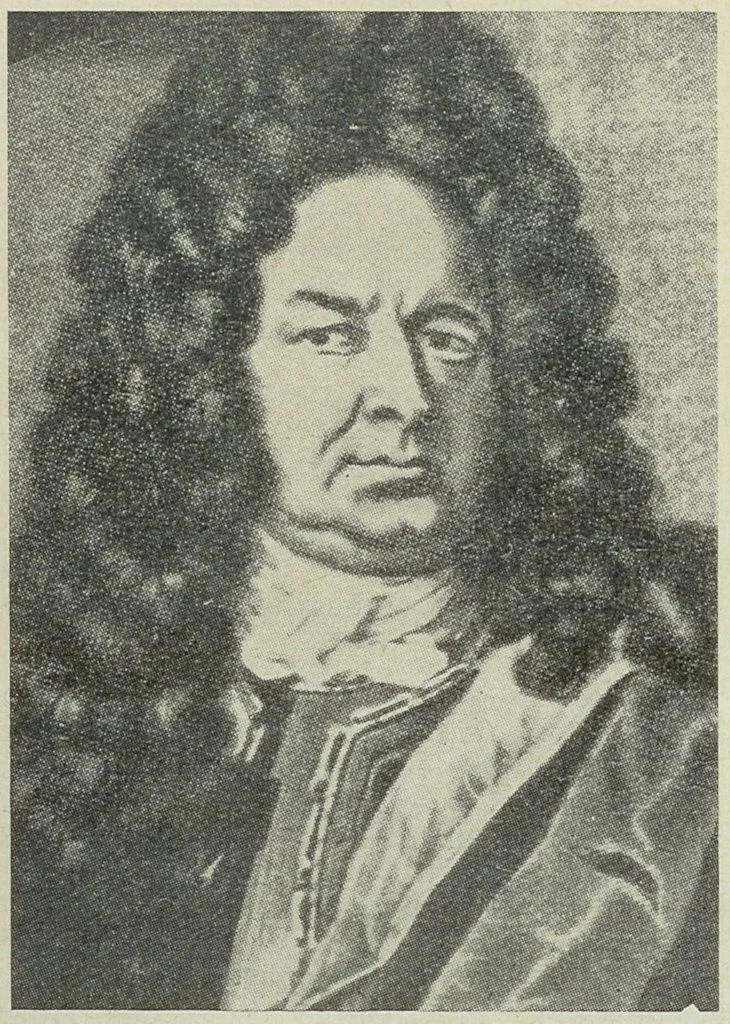
Hans Carl von Carlowitz, portrait by Martin Bernigeroth, c. 1733. Source: Wikimedia Commons, Public Domain.
Whenever I tell people that I work in sustainability, I often get the same question: “What do you actually do? And what is sustainability, really?”
I’ve learned to start with a simple explanation: I help understand how a company and its products affect the environment and society, and how these impacts can be reduced or improved. But in reality, it is not that simple. Sustainability has grown into a wide and complex topic over time. To understand what it means today, it helps to look at where the idea first started.
In 1713, Hans Carl von Carlowitz, a mining administrator from Saxony, wrote about the responsible use of forests in his book Sylvicultura Oeconomica. At that time, wood was an essential resource, especially for mining and everyday life. Carlowitz argued that people should only harvest as much wood as the forest could naturally regrow.
The idea was simple: do not use more than nature can regenerate. This principle is still at the heart of sustainability today.
Another important figure in the story of modern sustainability is Rachel Carson. Through her book Silent Spring, published in 1962, she helped people understand that environmental harm is not always visible at first, but it can deeply affect ecosystems, animals, and human health. She challenged the careless use of pesticides at a time when it was not easy to speak against powerful industries, and her work helped inspire the modern environmental movement.
Her story is especially powerful because she continued to defend her message despite criticism, pressure, and serious personal challenges. As a woman scientist, she faced personal attacks and strong criticism from the chemical industry, while also dealing with serious health issues. Although she passed away less than two years after Silent Spring was published, the awareness she helped create later contributed to major political changes, including the National Environmental Policy Act and the establishment of the U.S. Environmental Protection Agency in 1970.
Her work shows how environmental awareness can move beyond science and become part of public debate, policy, and collective responsibility. This is also how the meaning of sustainability continued to evolve over time.
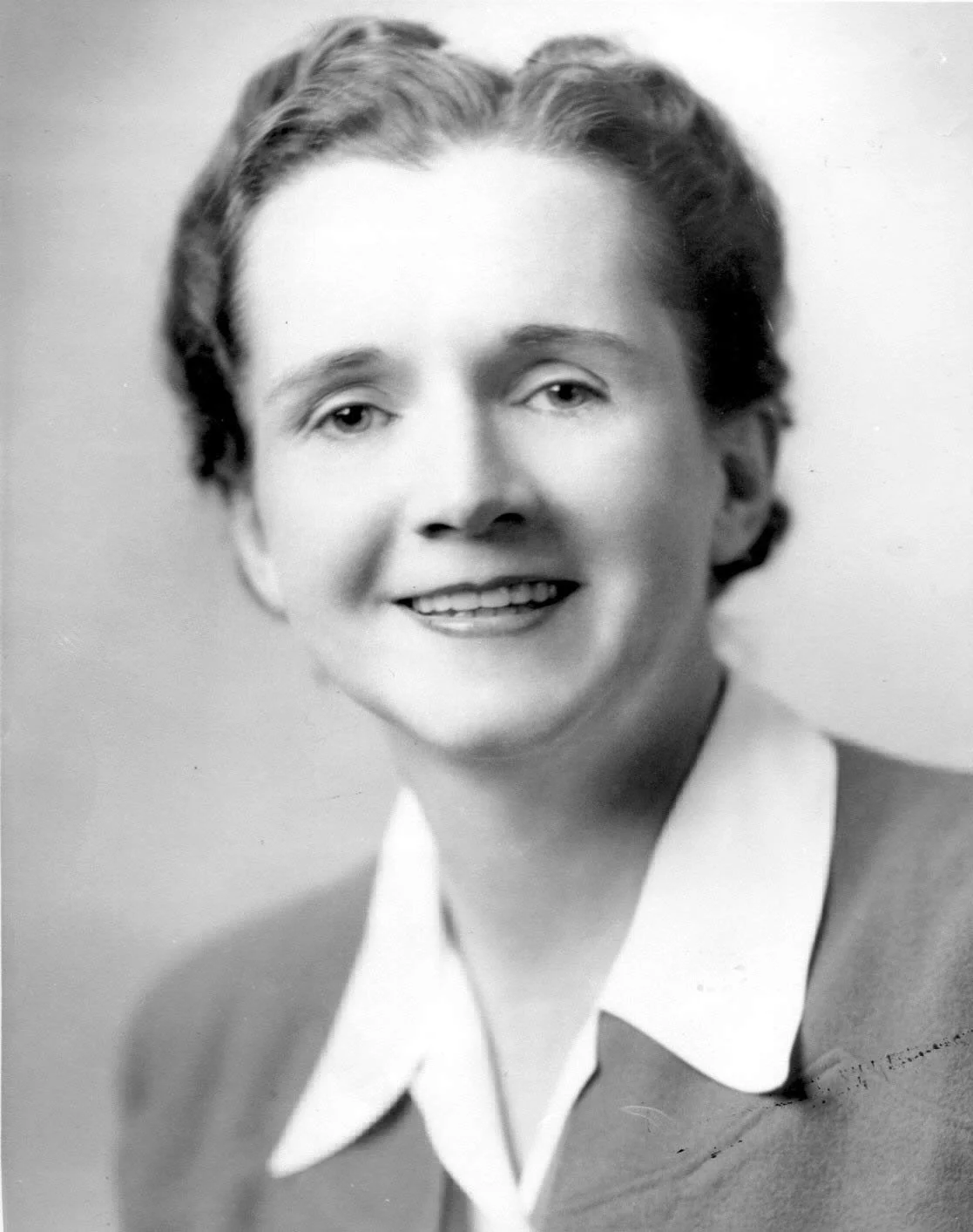
Rachel Carson portrait. Source: U.S. Fish & Wildlife Service, Public Domain. via Wikimedia Commons
While sustainability is rooted in environmental protection and responsible resource use, today, it is also about people, health, society, ethics, business decisions, long-term responsibility and many other topics. This shift became especially visible through the work of the United Nations, which helped turn sustainability from an environmental idea into a global agenda.
A key moment in this development was the Brundtland Report, Our Common Future, published in 1987. It introduced one of the most widely used definitions of sustainable development: meeting the needs of the present without compromising the ability of future generations to meet their own needs.
This definition shows three important ideas:
Sustainability is about today’s needs, because people, communities, and economies still need to function now.
It is about future generations, because our decisions should not create problems that others will have to carry later.
Lastly, it is about balance, between environmental limits, social responsibility, and economic development.
Rachel Carson wrote in Silent Spring: “In nature, nothing exists alone.”
I think this sentence explains sustainability concept very well. Our choices are connected to resources, ecosystems, wildlife, people, emissions, supply chains, health, and future generations. In the business world, this is exactly how I see sustainability should be reflected today. It is not only a strategy, a report, or a department name. It is a shared responsibility that needs collaboration across products, supply chains, operations, finance, and compliance. The role of sustainability professionals is not to own the topic alone, but to connect people, translate complexity, and help turn awareness into better decisions.
Sources / Further reading
Kietzmann, A. (2024). Sustainable Development. IBU – Institut Bauen und Umwelt e.V.
https://ibu-epd.com/en/sustainable-development/
Forstwirtschaft in Deutschland. (n.d.). Hans Carl von Carlowitz: Sein Leben und Wirken.
https://www.forstwirtschaft-in-deutschland.de/forstwirtschaft/nachhaltigkeit/hans-carl-von-carlowitz/
RachelCarson.org. (n.d.). The Life and Legacy of Rachel Carson.
https://www.rachelcarson.org/
Jarvie, M. E., & Encyclopaedia Britannica Editors. (n.d.). Brundtland Report. Encyclopaedia Britannica.
https://www.britannica.com/topic/Brundtland-Report
Carson, R. (1962). Silent Spring. Houghton Mifflin.
Encyclopaedia Britannica. (2026, May 23). Rachel Carson. Encyclopaedia Britannica.
https://www.britannica.com/biography/Rachel-Carson
Silent Spring Institute. (n.d.). The legacy of Rachel Carson. Retrieved June 23, 2026.
https://silentspring.org/about-us/our-story/legacy-rachel-carson-0
TED-Ed. (2020, March 17). How one scientist took on the chemical industry — Mark Lytle [Video]. YouTube.
https://www.youtube.com/watch?v=ezVEzCmiXM4
Untold History. (n.d.). Rachel Carson’s fight for the environment [Video]. YouTube.
https://www.youtube.com/watch?v=SLmxBYEFGkQ
